
The Collapse of Boundaries: When Everything Became Work
The year before the pandemic, I experienced a medical issue that brought the uncomfortable realization that I felt calmer and emotionally lighter in a hospital than I was at work. I left the company I had been working for over a decade because I felt increasingly disconnected from the work and, if I am honest with myself, increasingly taken for granted.
The timing of the transition could not have been stranger. My first day at my new job coincided exactly with the beginning of the COVID confinements. Overnight, my home became my office, my meeting room, my workspace, and eventually the place where almost every aspect of life happened.
Like many people, I initially saw remote work as a temporary adjustment. What I did not fully recognize at the time was how deeply the loss of separation between environments affects the mind. The same walls became associated with work, stress, meetings, deadlines, and recovery all at once. There were no transitions anymore. No commute to decompress. No distinction between professional and personal space. Everything slowly blended together.
Ironically, returning to the office did not fully solve the problem. In some ways, it simply replaced one imbalance with another. The long commutes, the rigid schedules, the exhaustion of work-sleep-repeat routines, and weekends spent recovering instead of truly living slowly created a different form of burnout.
My productivity remained stable. My performance remained strong. Outwardly, things looked fine. Internally, however, I was running on diminishing reserves.

Work Followed Everywhere
During that period of my life, work followed me everywhere. My phone became my office. My home became an extension of work. Even moments that were supposed to create recovery often carried a lingering sense of unfinished responsibility. The boundaries were not destroyed overnight; they eroded gradually until I stopped recognizing their absence altogether.
Looking back, there are many things I would approach differently today. I would create more intentional separation between personal and professional environments. Two computers instead of one. No work applications on personal devices. No passive checking of emails late at night. More deliberate moments of disconnection. Not because work is negative, but because meaningful work deserves a healthy mind capable of sustaining it over the long term.
I still think about work outside of office hours, and I suspect I always will. Creativity does not operate on a schedule. Some of my best ideas arrive unexpectedly during a walk, a drive, or late at night. The difference now is intentionality. Inspiration should feel welcomed, not imposed. There is a profound difference between choosing to engage with work because something meaningful excites you and feeling psychologically unable to disconnect from it.

Productivity Without Recovery
One of the most deceptive aspects of burnout is that productivity often survives longer than well-being does. From the outside, everything can appear stable while internally the ability to recover slowly collapses.
That was certainly true in my case. My work quality remained strong, deadlines were met, projects moved forward, and externally there were few obvious signs that anything was wrong. Eventually, even meaningful work begins to feel emotionally heavy when every day becomes centered around output with too little space to mentally reset.
One of the biggest lessons I learned is that recovery cannot simply mean the absence of work. Real recovery requires intentional separation, movement, and environments that allow the mind to reset. Working through lunch breaks, remaining constantly available, or treating rest as unproductive time only accelerates exhaustion over the long term.
Great leaders understand this intuitively. They recognize that long-term performance is not created by extracting the maximum amount of output from people every day, but by creating conditions where people can remain engaged, creative, healthy, and effective over time. The goal is not simply productivity. The goal is sustainable productivity.
What ultimately helped me through that period was not simply flexibility or policy, but people who understood that well-being and performance are deeply connected; people who recognized that stepping outside, taking distance, or briefly disconnecting was not avoidance from work but part of sustaining it.
The Weight of the Work Place: Environment Shapes Cognition
The second major realization that emerged from that period of burnout was understanding how deeply environments influence the way we think, feel, and process the world around us. Before that, I largely viewed workplaces as neutral settings. An office was simply where work happened. Home was where life happened. A city was little more than a backdrop to routines and responsibilities.
Over time, however, I began noticing something difficult to ignore: different environments consistently produced different emotional and cognitive states within me. Certain places made me calmer and more reflective. Others made me more energized, social, creative, or decisive. Some environments reduced mental noise while others amplified it. Even the same problem could feel radically different depending on where I was physically, emotionally, and culturally when thinking about it.
What surprised me most was how subtle these influences often were. The amount of daylight, the pace of a city, proximity to nature, architecture, noise levels, language, weather, and even the rhythm of social interactions all shaped my state of mind in ways I had rarely consciously acknowledged before.
That realization fundamentally changed how I approached work. I stopped asking where I was supposed to work and started asking what kind of environment best supported the type of thinking, energy, or perspective I needed in that moment. Some environments encouraged focus and long-term reflection. Others encouraged movement, creativity, or emotional clarity. Instead of forcing every task into the same physical and mental framework, I began understanding work as something adaptive, influenced by rhythm, atmosphere, and context.
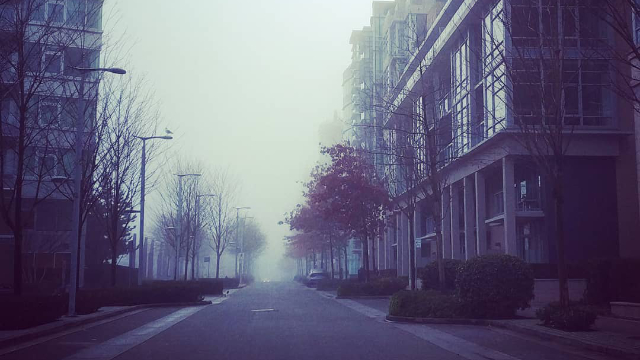
The Invisible Influence
One of the most deceptive aspects of environment is how quietly it affects us. Most of the time, we believe our thoughts are entirely our own while failing to notice how much our surroundings shape our emotional state, energy, and perception.
I began noticing this most clearly after moving regularly between different cities and work environments. Certain places naturally slowed my thinking down and created space for reflection. Others sharpened my focus and increased my energy. Some environments made problems feel heavier and more immediate, while others created enough distance to approach the same issues with greater clarity and calm. None of these effects were dramatic in isolation, but accumulated over time they profoundly influenced both my well-being and the quality of my thinking.
I realized how often modern work culture treats environments as interchangeable and productivity as something that exists independently from context. In reality, the conditions surrounding us influence far more than comfort alone. They shape attention, stress levels, creativity, patience, emotional resilience, and ultimately the sustainability of our work.

Thought in Motion
Another awakening that gradually emerged was that some of my clearest thinking rarely happened sitting still at a desk. Some of my best ideas appeared while walking near the ocean, driving between cities, swimming, sitting in an airport, or simply changing environments long enough for my thoughts to loosen from their usual patterns.
Movement has a way of interrupting mental rigidity. When we remain in the same physical and emotional environment for too long, our thinking often becomes repetitive without us noticing. Changing scenery, pace, or sensory input can create just enough distance for the mind to reorganize itself naturally. Problems that felt overwhelming in one setting often became manageable after movement created perspective.
This was particularly important for creative and strategic work. Creativity does not always respond well to confinement or rigid structure. Sometimes clarity emerges through motion itself. A long walk can produce better ideas than forcing another hour in front of a screen. Over time, I stopped seeing movement as time away from work and started recognizing it as part of the thinking process itself.

Changing the Lens
Perhaps the most fascinating understanding was discovering how dramatically perspective changes depending on where we are and how we engage with the world around us. Certain problems that felt emotionally heavy in one environment became easier to understand in another. Sometimes the issue itself had not changed at all. What changed was the lens through which I was viewing it.
Distance creates perspective in ways that are difficult to appreciate until experienced directly. Physical distance, emotional distance, cultural distance, and even linguistic distance all influence how we process complexity. There were moments when discussing an issue in French instead of English subtly changed the way I approached it emotionally and intellectually.
Over time, I began to notice that environments do more than influence mood. They influence perception itself. They shape what we notice, what we prioritize, how we communicate, and how we frame solutions. Once I understood that, changing environments no longer felt like stepping away from work. In many ways, it became one of the most effective ways to approach it differently.
Once I became aware of it, I could no longer see environments as passive backgrounds. They were active participants in the way I worked, recovered, communicated, and solved problems.
Beyond the Office: Work as Adaptive Rather Than Location-Bound
One of the conclusions I gradually arrived at was that I no longer viewed work as something inherently tied to a single location. That does not mean offices have no value. In many ways, offices remain incredibly effective environments for collaboration, mentoring, communication, and structure. Some people thrive in them. Some types of work benefit enormously from shared physical spaces. I understand why organizations continue to value them, and I also understand why many leaders worry about productivity, accountability, and cohesion when employees are dispersed.
I have seen people abuse hybrid work arrangements. I have seen employees treat working from home as an extension of personal time rather than a professional responsibility. I have also seen the resentment that can emerge when some workers are granted flexibility that others, because of the nature of their work, simply cannot access. Those frustrations are real, and pretending otherwise oversimplifies the conversation.
But I have also seen the opposite side of that equation: I have seen highly engaged employees integrate work naturally into their lives in ways that benefited both themselves and their organizations. I have seen people answer urgent questions while cooking dinner, continue brainstorming after hours because they genuinely cared about the outcome, or remain mentally engaged long after the official workday ended. Not because they were forced to, but because they felt ownership, trust, and flexibility.
What struck me over time was how quickly that dynamic could change when trust disappeared. Organizations responding to low performers by implementing rigid policies unintentionally punished highly engaged employees. What changed in many cases was not their productivity, but their relationship with the organization. The moment flexibility disappeared and trust was replaced by rigid oversight, the emotional contract changed as well. Employees who once contributed voluntarily beyond expectations often became far more transactional in return. People who once voluntarily remained engaged outside strict work hours began disconnecting the moment the workday ended. Laptops stayed at the office. Emails waited until the next morning. The work still got done, but something important had been lost in the process.
That experience changed the way I think about work. I no longer believe the primary challenge is deciding whether offices or remote work are inherently better. The more important question is whether organizations are creating environments, cultures, and rhythms that allow people to sustain meaningful engagement over time.

Trust, Autonomy, and Reciprocity
The longer I have worked in flexible and geographically distributed environments, the more I have come to believe that trust is one of the most underestimated forces inside modern organizations. High-performing employees often respond to trust by becoming more engaged, more proactive, and more invested in the success of the organization as a whole. Autonomy creates ownership when people genuinely care about their work.
What many organizations struggle to recognize is that discretionary effort is rarely forced. It is volunteered. People willingly go beyond expectations when they feel respected, trusted, and connected to a healthy culture. The inverse is also true. When employees feel constantly monitored or treated primarily as risks to manage, many naturally retreat toward doing only what is formally required of them.
The danger emerges when organizations attempt to solve cultural or performance problems exclusively through control and uniformity. While structure and accountability absolutely matter, treating all employees as though they cannot be trusted often damages the very discretionary effort that strong organizations depend on most. Trust, when supported by the right culture and expectations, creates a level of engagement that surveillance rarely can.
Culture Beyond Geography
Working across multiple cities and with teams distributed throughout North and South America also changed the way I think about organizational culture. Different regions naturally have different rhythms, communication styles, and approaches to work. A conversation in Montreal does not feel the same as one in Vancouver or San Diego. Different cultures approach hierarchy, urgency, collaboration, and relationships differently.
That experience reinforced something important for me: culture is not created simply by placing people in the same building for a fixed number of hours each day. A strong culture comes from shared values, mutual respect, communication, trust, and a collective sense of purpose. Physical proximity can strengthen those things, but it does not automatically create them.
That realization has fundamentally changed the way I think about work environments. Offices still matter. Face-to-face interaction still matters. Different individuals thrive under different conditions, and different forms of work require different environments. The companies that adapt successfully will be the ones that learn how to balance flexibility, accountability, trust, and human connection in sustainable ways. Those things emerge from culture first.
Work is not less legitimate because it happens somewhere other than an office. Work is work. The office is simply one environment among many, each with its own strengths, limitations, and purposes.
Complementary States of Mind Between Nature, Sunlight, and Snow
Over time, I stopped thinking about the different cities I worked from as temporary work locations and started understanding them as complementary mental and emotional environments. Each place supports a different aspect of who I am, how I think, how I recover, and ultimately how I perform professionally. None of them replace one another. They work together.
What surprised me most was realizing that productivity itself is not a single mental state. Different types of work require different forms of energy, perspective, and emotional balance. Strategic thinking does not emerge from the same conditions as relationship-building. Creativity does not always emerge from the same mindset as execution. Some environments help me slow down and reflect. Others sharpen my thinking, increase my energy, or reconnect me socially and culturally to parts of myself that influence the way I approach problems.
For years, I believed consistency was the key to performance. What I eventually discovered was that variation, movement, and environmental contrast were equally important. Different places unlock different forms of clarity. Different rhythms support different forms of work. Once I stopped trying to force every aspect of my life and work into the same environment, I found myself becoming not only more productive, but more balanced and sustainable over time.
Today, Vancouver, San Diego, and Montreal each occupy a distinct role in the way I live and work. Together, they form a rhythm that feels deeply aligned with both my personality and the kind of work I do.
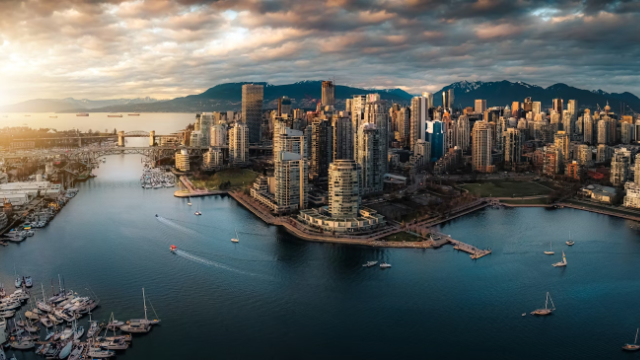
Vancouver: Grounding Thought and Perspective
Vancouver is home in the deepest sense of the word. It is where I feel grounded emotionally, professionally, and personally. The mountains, the ocean, the rain, and the west coast rhythm all create an environment that naturally reduces stress and gives me space to think clearly. Even after spending time elsewhere, it is always the place I return to recalibrate.
Professionally, Vancouver has also reshaped the way I think about the role of the office itself. The office is no longer where all work happens. Instead, it has become the place where certain types of work happen best. It is where I go to accelerate projects, collaborate directly with colleagues, and access expertise quickly when I feel stuck on something. There is tremendous value in being able to walk to someone’s desk, solve an issue in five minutes, or have spontaneous conversations that move projects forward faster than endless email chains ever could.
At the same time, home has become equally important for a different kind of productivity. Because my work spans multiple time zones, home gives me flexibility in ways the office never could. I can begin my day at four in the morning, speaking with colleagues on the East Coast while still sitting in my kitchen with hot chocolate in hand. Later in the evening, I can connect with our Australian team without feeling trapped inside rigid schedules or office constraints. There is also a level of openness and trust in those conversations that often comes more naturally from home environments than from formal office settings.
Beyond work itself, Vancouver offers something harder to quantify but equally important: recovery. Being close to the ocean, walking outside when frustrated, or simply living within the slower cadence of the West Coast helps regulate stress in ways I did not fully appreciate earlier in my career. That balance allows me to sustain performance without feeling constantly depleted. Vancouver grounds not only my life, but the way I think.

San Diego: Creating Distance, Finding Clarity
If Vancouver grounds me, San Diego restores me. There is something about the climate, the light, and the Mediterranean feeling of Southern California that changes my relationship with stress almost immediately. The longer daylight during the fall and winter months, the openness of the environment, and the cultural rhythm of the city all help maintain an energy level that allows me to continue performing at a high level without feeling emotionally compressed.
San Diego also consistently changes the way I approach problems. Whenever I find myself mentally stuck on a project or struggling to gain clarity on a difficult issue, distance often becomes part of the solution. Problems that felt heavy or overly complex in one environment frequently become more manageable when viewed from another. It is not that the problem itself changes. It is that my perspective changes with it.
Over time, I realized this was not accidental. Certain environments naturally create emotional distance from stress, and that distance creates clarity. San Diego has become that place for me. Whether walking near the ocean, spending time outdoors, or simply existing within a culture that feels more open and less compressed, I consistently find myself thinking more creatively and more optimistically there. Some of my most important professional breakthroughs have emerged not from forcing solutions at a desk, but from allowing my environment to create enough mental space for ideas to reorganize themselves naturally.
On a personal level, San Diego also reconnects me with memories of summers spent in Spain growing up. There is a familiarity to the light, the architecture, the outdoor lifestyle, and the pace of social interaction that feels emotionally restorative. It is my happy place in the truest sense of the expression, and I no longer dismiss the impact that happiness and emotional well-being can have on professional performance.

Montreal: Thinking Through Another Language
Montreal was the place I did not realize I needed until I began spending significant time there. While San Diego reconnects me with memories of summers in Spain, Montreal reconnects me with my French roots. The language, culture, energy, and rhythm of the city awakened a side of myself that I had not fully realized I was missing.
Professionally, Montreal challenges me in productive ways. The pace of work on the east coast is noticeably faster and more intense than what I am accustomed to on the west coast. Spending time there helped me better understand the different rhythms and expectations that exist across teams and regions. It also became the place where the more outward-facing side of my work truly came alive. Meeting customers, visiting operations, and traveling to remote sites transformed abstract marketing strategies and data analysis into direct human interactions and real-world understanding.
Some of the most rewarding moments have come during long road trips across Quebec with coworkers and customers. Those hours on the road create space for conversations, knowledge-sharing, and perspectives that rarely emerge inside structured meetings. I have learned an enormous amount simply by listening, discussing problems openly, and experiencing firsthand how people operate in very different environments.
Perhaps most fascinating to me is how language itself changes the way I think. After spending several days immersed in French, I often find myself approaching analytical and data-heavy problems differently. The mental framing shifts subtly but noticeably. It is difficult to fully explain, but changing language also changes perspective. More than anything, Montreal helped me reconnect with a side of myself that had quietly gone underused for years. The city does not feel external to who I am anymore. It feels like a missing piece that finally found its place again.
I stopped seeing productivity as a fixed state that came from discipline alone; and started seeing it as something deeply connected to environment, culture, movement, and emotional balance.
Sustainable Performance Through Integration and Balance
Looking back, one of the biggest misconceptions I carried in my career was believing that sustainable performance came primarily from discipline, consistency, and maximizing productivity at all times. For a long time, I approached work almost mechanically: optimize schedules, increase efficiency, push harder, recover later. What I eventually realized, however, is that meaningful long-term performance is far more connected to rhythm, environment, recovery, and emotional balance than I had previously understood.
Burnout forced me to confront that reality directly. It forced me to recognize that maintaining output and sustaining well-being are not separate challenges competing against one another. In many ways, they are deeply interconnected. The quality of thought, creativity, judgment, communication, and decision-making all depend on maintaining enough mental and emotional space to function clearly over time.
What changed my perspective most was not stepping away from meaningful work. If anything, I feel more engaged today than I did before. The difference is that I no longer see recovery, movement, travel, culture, relationships, or changes in environment as distractions from work. I see them as part of the conditions that allow meaningful work to remain sustainable.
Over time, I stopped trying to force every aspect of my life into a single rigid structure. Different places now support different forms of thinking, different forms of energy, and different aspects of my personality. Instead of fighting that reality, I began building a rhythm around it. The result has increased productivity, but created something far more valuable: sustainable productivity.

Performance Without Depletion
One of the most important lessons I learned from burnout is that exhaustion is not proof of commitment. For years, many professional environments normalized the idea that constant availability, working through breaks, and sacrificing recovery were signs of dedication or ambition. In reality, that approach often damages the very qualities that make meaningful work possible in the first place.
Creativity, strategic thinking, emotional intelligence, patience, and good judgment all require periods of recovery. They require environments where the mind can breathe, reset, and reorganize itself naturally. Some of my clearest thinking has emerged not during long hours staring at a screen, but while walking near the ocean, driving between cities, stepping outside for fresh air, or allowing myself enough distance from work to regain perspective.
What I once viewed as interruptions to productivity, I now recognize as part of sustaining it. A real lunch break, a walk outside, changing environments for a few hours, or disconnecting long enough to mentally reset are not acts of disengagement. They are investments in long-term clarity and performance.
The best managers and organizations understand this instinctively. Sustainable performance is not created by extracting the maximum possible output from people every single day. It is created by building environments where people can remain engaged, creative, healthy, and motivated over the long term without feeling constantly depleted in the process.

Integration Rather Than Separation
Perhaps the most meaningful change of all has been realizing that balance does not necessarily come from strict separation. Before, I often viewed work and personal life as competing forces constantly fighting for space and attention. The solution, I believed, was to separate them as cleanly as possible.
Today, I think about it differently.
My work is meaningful to me. I genuinely enjoy the creativity, problem-solving, relationships, and strategy involved in what I do. It is not something I simply switch on and off. The goal was never to eliminate work from my personal life entirely. The goal was learning how to integrate it in a healthier and more intentional way.
There is a profound difference between work being present in your life because you are inspired, engaged, and intellectually curious, and work imposing itself on every moment because boundaries and recovery have disappeared. One creates energy. The other slowly drains it.
What I eventually found through Vancouver, San Diego, and Montreal was not a perfect balance, but complementary forms of balance. Vancouver grounds me and creates perspective. San Diego restores clarity and emotional distance from stress. Montreal reconnects me with culture, language, and direct human interaction in ways that sharpen both my thinking and my understanding of people. Each environment strengthens a different side of who I am, and together they create a rhythm that feels far more sustainable than the life I was living before.
