
I’ve been a Tron fan for as long as I can remember. I was there for the glowing circuits, the sound of identity discs slicing through the air, the haunting synths of Daft Punk’s Legacy soundtrack, all of it. I’m one of the few people who is always looking for another return to the Grid. I’ve been wanting toys since I was a kid, and got the LEGO Tron: Legacy set on day one; I’ve spent years hoping we’d see another movie or a proper line of action figures that would finally do the franchise justice.
And yet, here I am again; disappointed. Tron: Legacy was like its predecessor a stunning, ambitious film that deserved far more success than it got. Their commercial failure was undeserved. But Tron: Ares and the HasLab campaign? Their lack of success feels, sadly, earned. These new efforts miss what made Tron special in the first place. They’re not terrible, just hollow. They don’t understand the world or the fans they’re trying to reach.
Missing from the Grid: The Characters Fans Actually Care About
At the heart of Tron has always been its characters, the ones who made the Grid feel human. Fans connect to Tron himself, to Flynn’s legacy, to Quorra’s curiosity, and to the emotional bond between the human and digital worlds. Without them, the Grid becomes just another glowing backdrop.
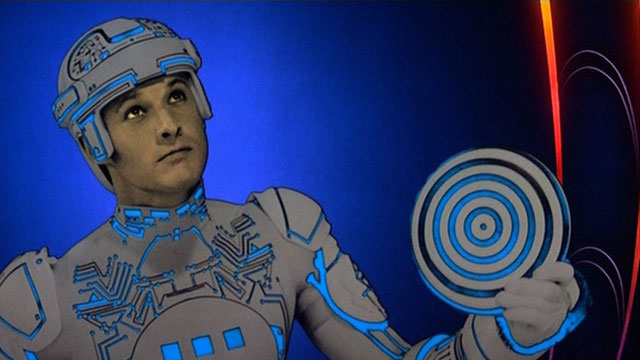
For a movie that’s supposed to carry the legacy of Tron and Tron: Legacy, it’s shocking that Tron himself barely factors in. Sam Flynn and Quorra, who bridged the digital and human worlds so powerfully in Legacy, are nowhere to be found. Instead, Ares introduces new faces with minimal ties to the mythos. They might fit a generic sci-fi story, but Tron was never meant to be generic — it was about identity, legacy, and the boundaries between creator and creation.
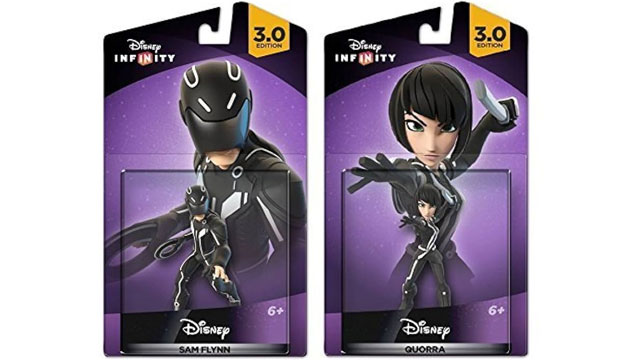
Likewise, Hasbro’s HasLab project gives us Tron figures — but not those Tron figures. The campaign skips the fan-favorite iterations of Sam, Quorra, and Clu from Legacy. Fans waited years for well-made representations of these icons, only to be offered obscure variants and background designs. It’s like releasing a Star Wars line without Luke, Han, or Leia — technically Star Wars, but spiritually hollow.
All Style, No Spark: When Visuals Replace Vision
One thing both the movie and the HasLab campaign have in common is that they look fine. On a surface level, they’re sleek, polished, and visually competent. But beyond the surface, there’s nothing that makes you feel like you’re inside the Grid. Both rely on aesthetic familiarity instead of vision, forgetting that Tron’s brilliance came from how it made the unreal feel meaningful.
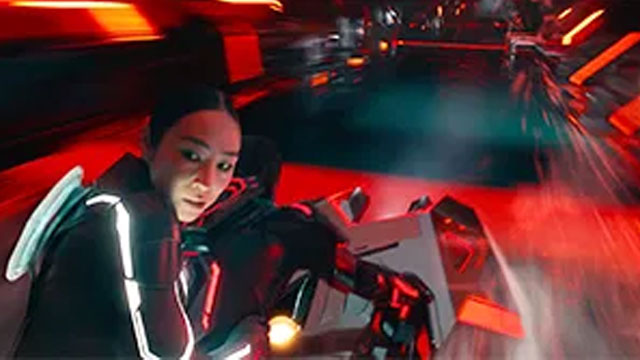
There’s no denying Ares looks slick. The lighting, costumes, and digital compositions capture that Tron aesthetic — but for what? The Grid is barely explored, and much of the action happens in sterile, real-world environments that feel disconnected from the series’ visual identity. Legacy dazzled with its design because it immersed us in the Grid. Ares treats it as a backdrop rather than a world worth revisiting.
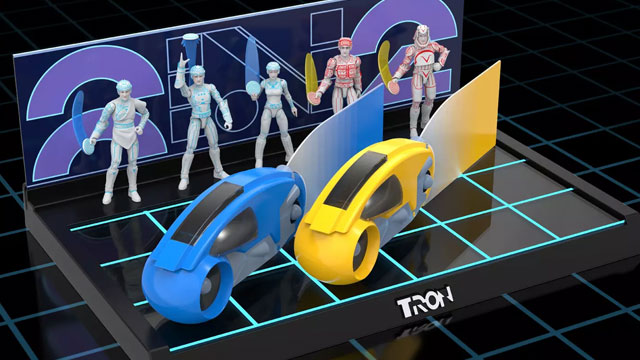
The HasLab line, too, gets the look right — glowing circuitry, angular designs — but chooses the wrong scale. At 1:18, the figures look small and underwhelming. Tron’s world has always been about scale and immersion. Fans wanted 6-inch Legacy-scale figures with light cycles that feel substantial. Instead, we got something that looks like it belongs in a discount bin, not a premium crowdfunding project.
The Great Bait and Switch: When Expectations Meet Reality
Fans don’t need perfection; they want authenticity. Both Ares and HasLab promised something that would continue the Tron legacy and deliver what fans had waited years for. Instead, they gave us something that merely borrows the name. When excitement turns to confusion, and anticipation to apathy, that’s when passion curdles into disappointment, and that’s where these two projects failed.
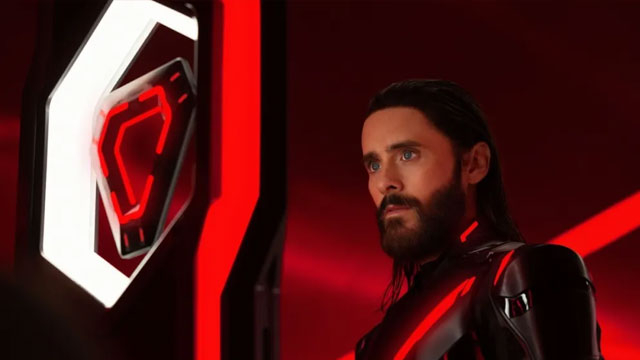
Marketing painted Ares as a continuation of the Tron saga, but the film feels detached from everything that came before. It’s a perfectly watchable sci-fi flick, but it could just as easily have been titled Digital Frontier and no one would have noticed. There’s no emotional continuity, no sense that this is the next chapter in a digital mythology forty years in the making.
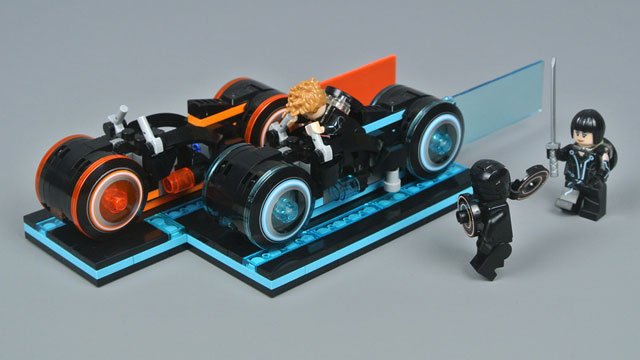
For years, fans begged for Tron Legacy figures and vehicles. What HasLab delivered was something else entirely: a small-scale experiment that ignored every collector preference. It’s a bait and switch in spirit — a product that uses the Tron name to sell something Tron fans never asked for. It’s the opposite of fan service — it’s brand exploitation.
Forgetting the Code: Losing Sight of What Made Tron a Cult Classic
To understand Tron is to understand why it’s a cult classic and not a blockbuster. Its appeal comes from its oddness, its introspection, and its unapologetic weirdness. It was never built to compete with Star Wars or Marvel; it existed in its own digital philosophy.
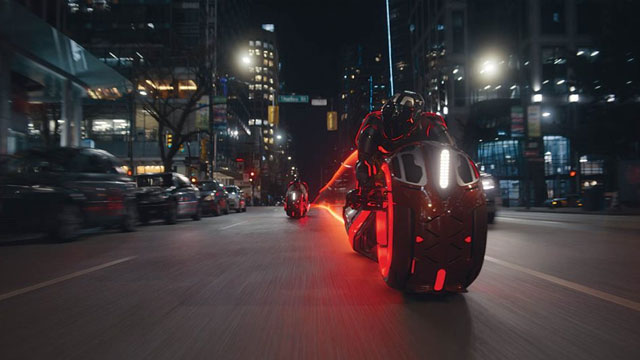
The movie feels like it’s trying to please everyone — action fans, sci-fi fans, even casual viewers — and in doing so, it pleases no one. The original Tron was weird, introspective, and ahead of its time. Legacy doubled down on atmosphere and emotional storytelling. Ares flattens those strengths into something algorithmic, as if engineered for an imaginary audience that doesn’t exist.
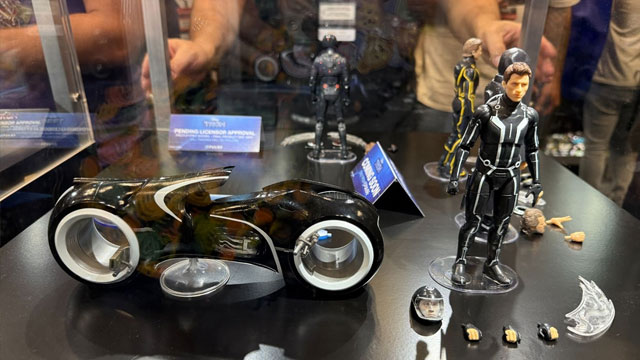
The HasLab team seems to have had the same misunderstanding. They’re not catering to Tron fans — they’re catering to the idea of what might sell. But Tron was never about mass-market appeal. It’s a cult classic for a reason. The fans who kept this franchise alive for four decades don’t want generic sci-fi designs. They want reverence, not reinvention for reinvention’s sake.
The Glow Fades: When Passion Gives Way to Profit
The tragedy of both projects is not that they failed, but that they feel like they were designed to fail; products of committees rather than creators. Instead of love letters to a visionary world, they come across as business experiments wearing Tron’s skin.
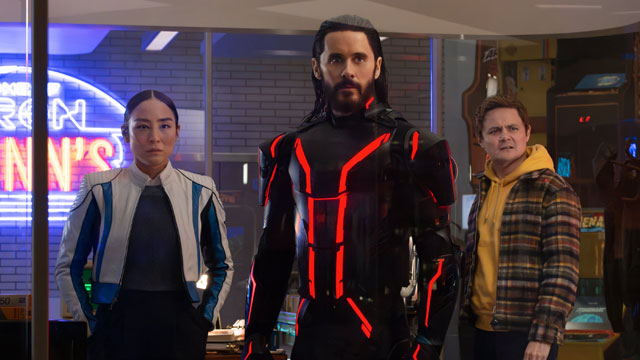
Everything about Ares feels like a studio product rather than a creative passion project. It’s competently made, but hollow — the kind of movie you expect to see quietly dropped on a streaming service, not celebrated as the revival of a cult franchise. It’s safe, sanitized, and soulless.
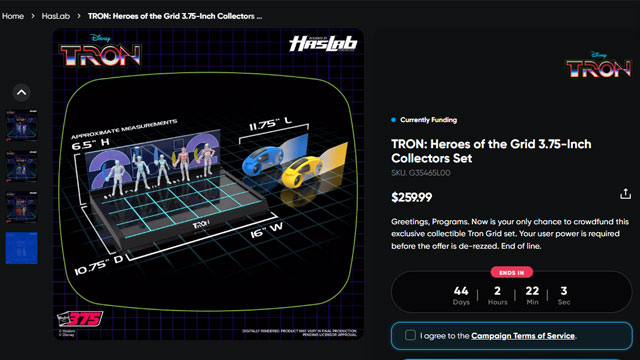
The HasLab campaign carries the same energy. Minimal content, maximal price. It’s expensive nostalgia packaged without understanding why that nostalgia existed in the first place. The promise of premium fan-driven products has been replaced by low-effort proposals designed to test how far loyalty can stretch before it snaps.
How the Grid Could Have Been Rerezzed
Both Tron: Ares and HasLab’s campaign failed not because Tron is irrelevant, but because the people behind them didn’t listen. To succeed, they needed to return to the Grid, both literally and spiritually. Ares should have embraced Legacy’s emotional core: the father-son dynamic, the digital mythos, the haunting melancholy of isolation in a glowing world. HasLab should have built on that legacy too, offering figures and vehicles that feel like Tron: sleek, innovative, and collector-worthy. Fans didn’t want another sci-fi product; they wanted to go back to the Grid. And for now, both projects have left the portal dark.

